Low Emission Zones in Spain: a complete guide for drivers

Low Emission Zones (LEZs, known as ZBEs in Spanish) have gone from being an experimental measure in a handful of big cities to a fact of urban life across Spain. If you drive in a Spanish city — or you’re planning to visit one by car — knowing what LEZs are, which vehicles can drive in them, and which environmental label applies to you is no longer optional: it’s a practical necessity if you want to avoid fines and plan your journeys better. Low Emission Zones (LEZs) aim to cut pollution and encourage healthier urban environments. For many drivers, though, the range of local rules, label-based restrictions and access limits can be confusing.
This guide covers everything you need to know: what the law requires of local councils, what counts as a low emission vehicle, how the DGT’s environmental label system works, and what foreign drivers travelling around Spain need to bear in mind.
What Low Emission Zones are and what the law requires
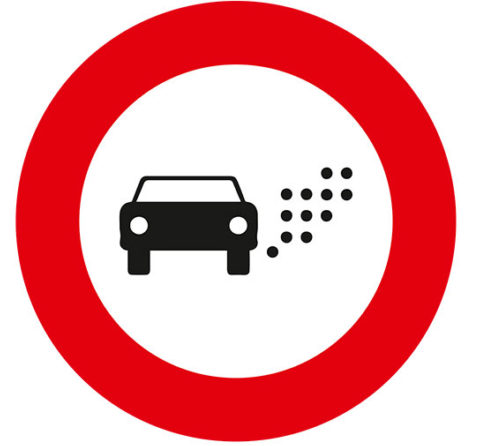
An LEZ is an area within a town or city where restrictions on access, driving and parking apply to certain vehicles based on their environmental impact, with the aim of improving air quality and cutting greenhouse gas emissions. Restrictions are set according to a vehicle’s environmental classification, determined by Spain’s Directorate-General for Traffic (DGT) through its environmental labels.
Councils required to set up LEZs
Under the Climate Change and Energy Transition Law, setting up these zones is mandatory for:
- All Spanish towns and cities with more than 50,000 inhabitants.
- Towns with more than 20,000 inhabitants that exceed the regulated pollutant limits.
- Island territories.
What counts as a low emission vehicle
Spanish law doesn’t set out a single, fixed definition of a “low emission vehicle”; instead, it uses the DGT’s environmental label system as a classification tool. In practical terms, low emission vehicles are considered to be any vehicle eligible for an environmental label — that is, the more efficient half of Spain’s vehicle fleet — with particular recognition for those carrying the Zero Emissions and ECO labels.
Technically speaking, low emission vehicles are defined by two main criteria:
- Propulsion technology: pure electric vehicles (BEVs), hydrogen fuel cell vehicles, plug-in hybrids (PHEVs) and conventional hybrids (HEVs) produce the lowest emissions in urban driving and receive the most favourable labels.
- Compliance with EURO emissions standards: the Euro standard regulates the maximum levels of pollutant emissions (NOx, particulates, CO…) a combustion engine can produce. Newer vehicles meet stricter standards (Euro 6, Euro 6d) and receive better labels. Older vehicles, which only meet earlier standards or none at all, are excluded from labelling or receive the least favourable ones.
In practical terms: if your vehicle is electric, a plug-in hybrid or a conventional hybrid, it will almost certainly meet the requirements to drive without restriction in Spain’s LEZs. If it’s a recent petrol or diesel car (post-2006 for diesel, post-2001 for petrol), you’ll also have access, though possibly with some limitations depending on the city. If it’s older than that, restrictions will increase.
Breakdownof DGT environmentallabels
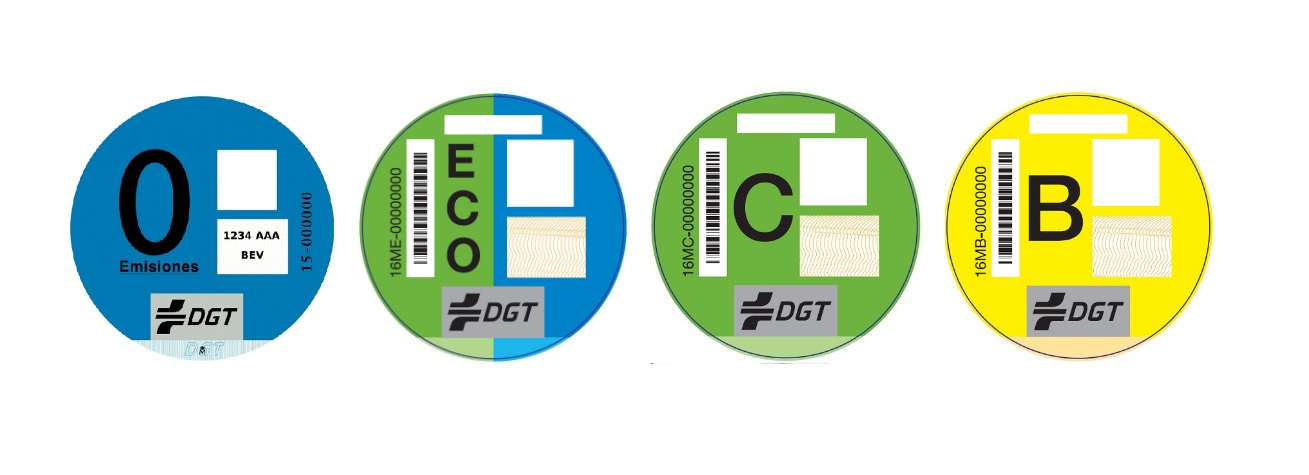
The DGT’s environmental label system has been in place since 2016 and classifies vehicles into four categories based on their environmental impact. It’s the main tool councils use to regulate access to their LEZs, parking benefits, and restrictions during high-pollution episodes.
In 2026, the labels remain the same four: Zero Emissions, ECO, C and B. Although the Sustainable Mobility Law passed in October 2025 initially proposed reforming the labelling system, a parliamentary amendment from the Partido Popular, backed by Vox and Junts, removed the obligation to reform the system in the short term. The current labels remain in force unchanged until further notice.
- Zero Emissions label (blue) — The most favourable
Vehicles: battery electric vehicles (BEVs), range-extended electric vehicles (REEVs), plug-in hybrids (PHEVs) with a minimum electric range of 40 km, and hydrogen fuel cell vehicles.
LEZ access: unrestricted access in all LEZs across Spain. Benefits in regulated parking zones in many cities (Madrid, for example, reserves special bays for these vehicles). No time or day restrictions.
- ECO label (green and blue) — Second category
Vehicles: plug-in hybrids (PHEVs) with an electric range under 40 km, conventional hybrids without a plug (HEVs), and vehicles running on compressed natural gas (CNG), liquefied natural gas (LNG) or liquefied petroleum gas (LPG). Must also meet the criteria for the C label.
LEZ access: unrestricted access in the vast majority of LEZs. Some cities may apply limitations during high-pollution episodes, but under normal conditions these vehicles drive freely.
- C label (green) — Third category
Vehicles: petrol cars and light vans registered from 1 January 2006, and diesel vehicles registered from 2014–2015 meeting Euro 6 standards. Vehicles with more than 8 seats and heavy petrol and diesel vehicles registered from 2006.
LEZ access: can drive in most LEZs, though with increasing restrictions. In Madrid, C-label vehicles can enter but face limitations on street parking in certain areas. Barcelona has announced it will restrict B-label vehicles from 2028, suggesting greater pressure on the C label in future.
-B label (yellow) — Fourth category
Vehicles: petrol cars and light vans registered between 1 January 2001 and 2005, and diesel vehicles registered between 2006 and 2013 (Euro 4–5). Vehicles with more than 8 seats and heavy vehicles registered from 2006.
LEZ access: variable restrictions depending on the city and time of day. In Madrid, B-label vehicles are banned from driving during high-pollution episodes. In Barcelona, they will be banned from 2028, with some exceptions. The regulatory trend across Spain points to growing restrictions for this category.
- No label — The most polluting vehicles
Vehicles: petrol cars registered before 1 January 2000 and diesel vehicles registered before 2006. These are the oldest and most polluting vehicles, not meeting any recent Euro standard.
LEZ access: very limited or banned access in active LEZs. In Madrid, since 1 January 2025, these vehicles have been banned from driving on any road in the municipality (environmental classification A in the National Vehicle Register). They’re the first to be affected in every town or city rolling out an LEZ.
How to find out which label applies to you
The quickest and most reliable way is to check your number plate on the DGT’s online portal (sede.dgt.gob.es), which returns your assigned label in under five seconds. You can also do this via the miDGT app or by calling 060.
Once you’ve confirmed your label, the physical sticker can be bought at any Correos (the Spanish post office) branch for €5, on presentation of your vehicle documents, or through Correos’ online shop with home delivery. Although the DGT states that displaying the label is technically voluntary at national level, several councils — starting with Madrid back in 2019 — require it to be clearly displayed in the bottom right corner of the windscreen in order to benefit from perks or avoid penalties within their LEZ.
What LEZs mean for foreign drivers
If you drive a vehicle with a foreign number plate in Spain, LEZs affect you too. The DGT can’t issue environmental labels to vehicles registered abroad, but that doesn’t mean you’re exempt from the restrictions: it means an equivalence system applies instead.
The equivalence system for foreign vehicles
Spain recognises the equivalence of several European countries’ own environmental classification systems with its own. If your vehicle comes from a country with its own environmental label system — such as Germany, Austria, Denmark or France — the DGT treats you as holding the equivalent Spanish label, and you can drive under the same conditions as a Spanish vehicle in that category.
However, if your vehicle comes from a country with no environmental classification system of its own, local authorities may apply restrictions based on the vehicle’s technical characteristics (engine type, year of registration, Euro standard) as shown in the vehicle’s documents or found in European type-approval databases.
- EU vehicles with their own labelling system: the DGT recognises the equivalence, and these vehicles can drive under the same conditions as the equivalent Spanish label. It’s worth carrying documents proving the vehicle’s technical specifications and, where applicable, having your home country’s label visible.
- EU vehicles without their own labelling system: restrictions apply based on the vehicle’s characteristics. An electric car or a recent hybrid from any European country won’t have any trouble driving in Spain’s LEZs. An older diesel may face restrictions equivalent to those for an unlabelled Spanish vehicle.
- Vehicles from outside the EU (international tourists): drivers visiting Spain with vehicles from third countries should find out about each city’s restrictions in advance. In highly touristy cities such as Madrid, Barcelona or Seville, LEZs are active permanently, and not knowing the rules doesn’t exempt you from a fine.
⚠️ Important for foreign drivers: the Spanish label is NOT valid in other European countries. If, after visiting Spain, you plan to drive in Germany, Austria, France or another country with its own low emission zone, you’ll need to get that country’s equivalent label before entering its restricted zones.
Howto prepare for your visit to a Spanish city with an LEZ
If you’re planning to visit a Spanish city with an LEZ by car, here are the recommended steps to avoid problems:
- Check the LEZ map for the city you’re visiting. Spain’s Ministry for Ecological Transition maintains an interactive map of all active LEZs in Spain on its official website (miteco.gob.es).
- Check the specific restrictions of the LEZ that affects you: each council sets its own activation hours, exemptions and penalty regime. Madrid, for example, has its LEZ active permanently, every day of the year. Barcelona activates its zone on weekdays from 7am to 8pm.
- Check whether your vehicle can enter based on its technology and age. If in doubt, check the DGT’s online portal using the number plate (if Spanish), or check your vehicle’s Euro standard.
- Consider parking outside the LEZ if your vehicle has restrictions. Many cities have car parks on the outskirts or at the edge of the LEZ, from which it’s easy to reach the centre by public transport.
LEZs city by city: current status in 2025–2026
While the law requires more than 150 councils to have their LEZs up and running, how far implementation has progressed varies significantly between cities. Here are the main ones:
- Madrid — Madrid LEZ (formerly Madrid 360): the largest and strictest. Covers the entire municipality and is active permanently, every day of the year, at all hours. Since January 2025, it bans driving for all vehicles with no environmental label (classification A). B-label vehicles face restrictions during pollution episodes. Enforcement is via ANPR cameras. A transitional regime approved in April 2026 temporarily allows certain vehicles to drive as long as nitrogen dioxide levels stay below the limit values.
- Barcelona — Rondes BCN LEZ and Metròpolis LEZ: Barcelona’s LEZ is the largest in Spain by area, covering more than 95 km² including municipalities in the metropolitan area. It operates on weekdays from 7am to 8pm. It currently bans driving for unlabelled vehicles and has announced restrictions on B-label vehicles from 2028. Enforcement is via cameras at access points.
- Valencia — Centro LEZ: covers the historic centre and surrounding areas. Unlabelled vehicles have very limited access. Details on hours and exemptions are set by local by-law.
- Seville — advanced rollout: Seville’s LEZ focuses on the old town and other high-traffic areas. Implementation has progressed significantly during 2024–2025.
- Bilbao — Bilbao Central LEZ: active since June 2024. Restricts access for the most polluting vehicles in the city centre.
- Other cities — active rollout: Zaragoza, Málaga, Córdoba, Girona (LEZ active since September 2025), Sabadell (active since September 2025, with fines from December), Palma de Mallorca and Benidorm, among others, are at various stages of implementation or already have an operational LEZ.
Driving electric or hybrid: the ultimate answer to LEZs
The regulatory trend is clear: LEZ restrictions will keep tightening over time, with more active cities, extended hours and more vehicle categories affected. Against that backdrop, electric and plug-in hybrid vehicles with a Zero Emissions or ECO label are best placed for the future of urban mobility in Spain: free access to all current LEZs, no time restrictions, and parking benefits in many cities.
✅ Electric vehicles (BEVs) and plug-in hybrids (PHEVs) with a Zero Emissions label can drive without restriction in all of Spain’s Low Emission Zones. Conventional hybrids (HEVs) and plug-in hybrids with a range under 40 km, carrying the ECO label, also have free access to virtually all active LEZs.
Beyond the freedom to drive in LEZs, electric and hybrid vehicle owners find further perks when it comes to urban parking: discounts or exemptions in regulated parking zones, reserved bays in some municipalities and, increasingly, access to charging infrastructure in public and private car parks.
Charge your electric vehicle at Telpark car parks — Charging points available in your city
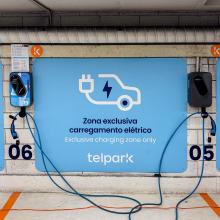
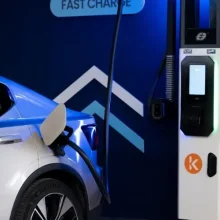
Telpark has electric charging points across its network of car parks in Spain’s major cities. If you drive an electric or plug-in hybrid vehicle, you can park and charge your car while you run errands, go shopping or grab a bite to eat, without worrying about range or LEZ restrictions.
Combining a vehicle with a Zero Emissions or ECO label with access to charging infrastructure at central car parks is, today, the most convenient and restriction-free way to get around Spanish cities, whatever measures each municipality goes on to adopt in the years ahead.