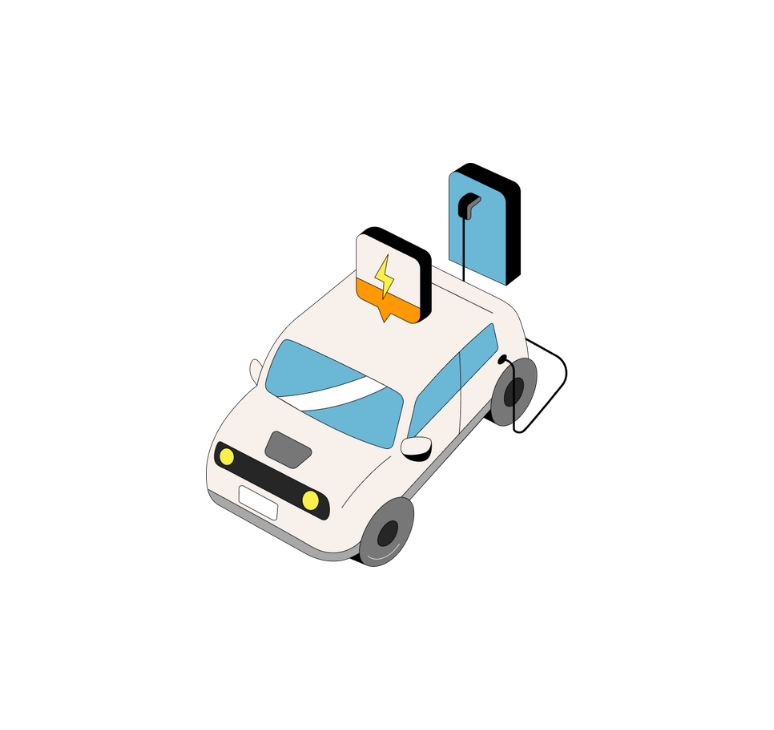
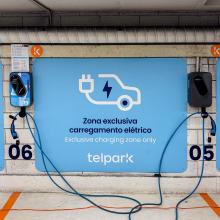
Types of electric car chargers: a complete guide

You’ve got an electric car, or you’re about to get one, and suddenly you’re surrounded by terms on every side: AC, DC, Type 2, CCS, CHAdeMO, kW here, kW there. You don’t need to be an engineer to get your head round this. With four clear concepts, you’ll know exactly what charger you need and what to expect when you park up.
Slow, fast and rapid charging: it’s all about time
Every charger does the same thing — puts energy into your battery — but not all of them do it at the same speed. Here’s the usual breakdown:
- Slow charging (up to 7.4 kW). This is what you’d have at home or at many long-stay car parks. A full charge can take all night. It makes sense when the car’s going to be parked for several hours: in your garage, at work, or at a car park where you’re leaving it while you get on with other things.
- Fast charging (between 7.4 kW and 22 kW). The middle ground. In a couple of hours you can recover a good chunk of the battery. This is the type you’ll come across most often in street car parks, shopping centres or urban areas: enough to charge up while you shop or work through a morning.
- Rapid charging (from 50 kW upwards, up to over 350 kW for the ultra-rapid ones). Here we’re talking minutes, not hours. In 20–40 minutes you can get back to 80% battery. This is the solution for long journeys, or when you need power right away and can’t afford to wait.
The rule of thumb: the higher the power, the faster you charge, but the charging point usually costs more too, and it’s harder on your car’s battery in the long run. For everyday driving around town, slow or fast charging is usually the more sensible option.
AC vs DC: the technical difference you actually need to understand
This is the distinction that explains why some chargers are slow and others are rapid.
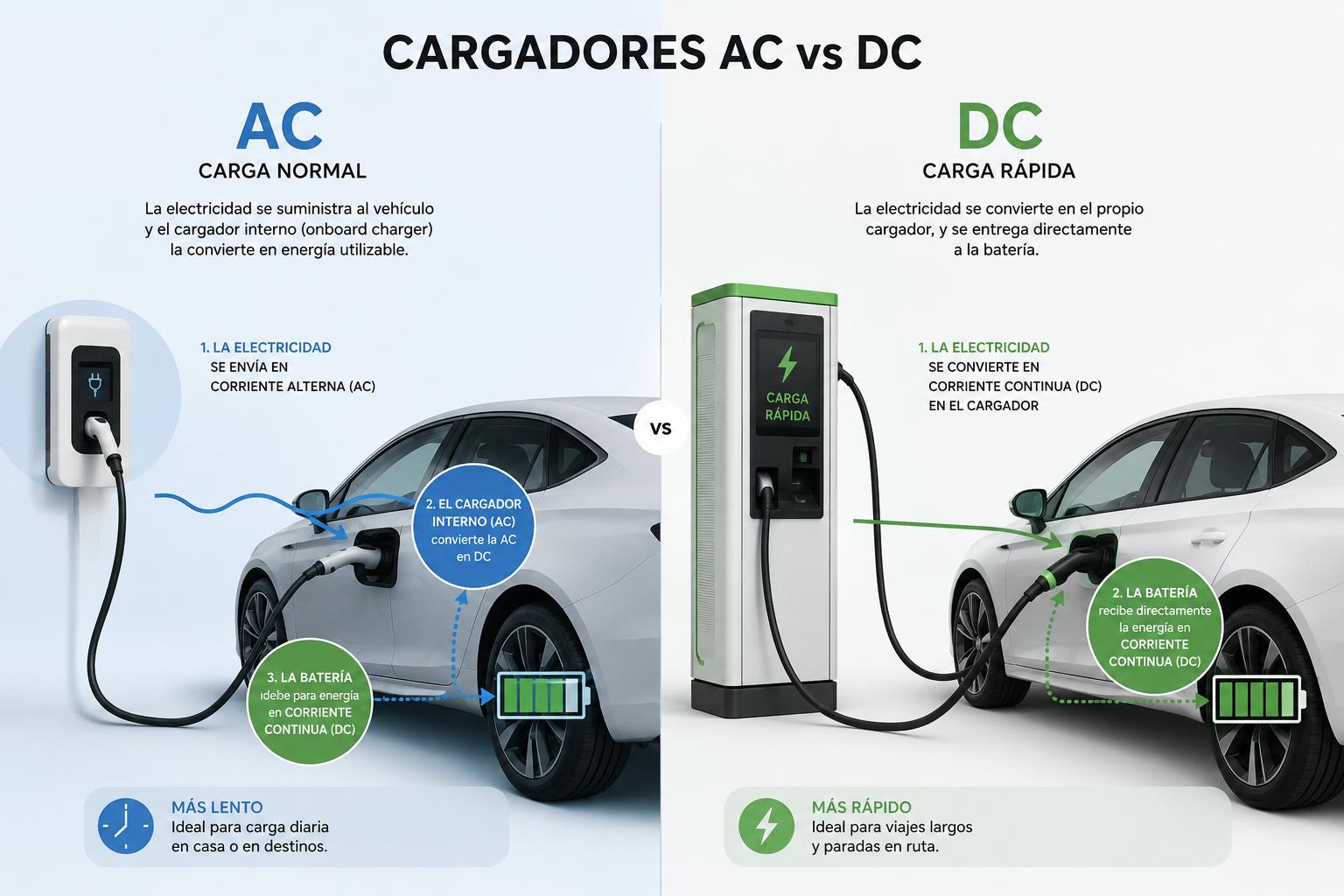
- AC (alternating current) is the current that comes out of the standard electricity grid. When you charge on AC, it’s your car itself that converts that current into DC to put it into the battery, using an onboard charger with limited power. That’s why AC charging is never ultra-rapid: the bottleneck is in the car, not the charging point. Slow and fast charging are always AC.
- DC (direct current) arrives already converted, straight from the charger itself, which is much bigger and more powerful than the one built into the car. It skips the internal conversion step, so it can push a lot more energy in a lot less time. All rapid and ultra-rapid charging is DC.
In short: if you see a charger that charges in minutes, it’s DC. If it takes hours, it’s AC.
Type 2, CCS and CHAdeMo: the connectors you’ll comes across
This is where people get most confused, but it’s simple if you think about it by charging type:
- Type 2. The standard connector in Europe for AC charging (slow and fast). Virtually every electric car sold in Spain and Portugal has one. If you’re charging at an urban car park or at home, this is the connector you’ll use almost every time.
- CCS (Combined Charging System The European standard for rapid DC charging. In practice, it’s a Type 2 connector with two extra pins underneath, so the same port on your car works for both AC and rapid DC. This is what you’ll find at most rapid chargers on motorways and at fast-charging stations.
- CHAdeMO. The Japanese standard for rapid DC charging, used mainly by brands such as Nissan (the Leaf, for example) or Mitsubishi. It’s becoming less common in new European cars, which have largely moved over to CCS, but you’ll still find it on rapid chargers and on cars already on the road.
If your car is recent and European, you’ll typically use Type 2 for everyday charging and CCS for rapid charging. CHAdeMO is the exception, not the rule.
What’s typical at an urban car park
In the setting where you’ll spend most of your charging time — a city car park, not a motorway station — the picture is fairly consistent:
- Power: fast AC charging points (11–22 kW) are the most common, with slow charging making up a smaller share. Ultra-rapid DC charging doesn’t make much sense in an urban car park, because the car’s going to be parked for a while anyway: it’s not worth paying for the infrastructure of a 150 kW charger for a use case that won’t take advantage of it.
- Connector: Type 2 in the vast majority of cases, since it’s AC charging.
- Typical use: you leave the car charging while you get on with your day — work, shopping, errands — and come back to plenty of charge. It’s not emergency charging; it’s charging that makes use of time you were going to spend parked anyway.
There’s an advantage to this that’s often overlooked: you don’t need the most powerful charger on the market if you’re going to be parked for two or three hours regardless. Fast charging covers that use case perfectly well, and it usually works out cheaper too.
Telpark’s Electric Charge
At Telpark, we’ve built our network of charging points with exactly this urban usage pattern in mind: you park, plug in, and get on with your day without having to think about power levels, connectors or juggling different apps.
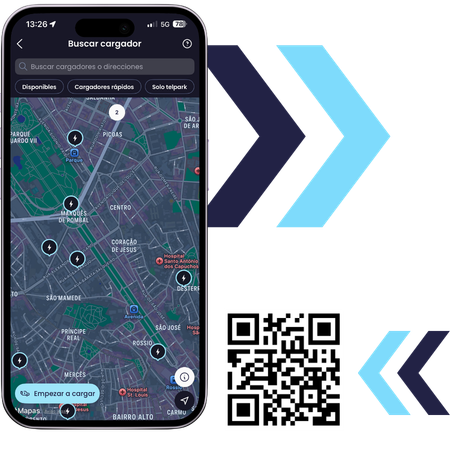
With Electric Charge, you can activate the charging point from the same Telpark app you already use to park, with no extra cards or contracts required. The points are monitored in real time, so you know they’ll be working when you arrive. And because they’re built into our car park network, the process is exactly the one you’re already used to: park, plug in, charge, and carry on. Discover Telpark’s EV charging serviceand find out how to access it through the app.
If your day-to-day involves parking for a couple of hours to work, run errands or go shopping, the fast charging you’ll find at our points is exactly the kind of solution built for that use case: you’re never short of time, and you’re never paying extra for power you won’t use.