Electric charging signs in Spain: a guide for electric vehicle drivers
You’ve got your electric car, you’ve clocked up plenty of miles, and you need to charge up. But when you reach a street, a car park or a motorway, you come across signs you’ve never seen before: a green plug, a pictogram of a car with a cable, a blue sign with several different-coloured pumps. What do they actually mean? Can you park there? Is there also conventional fuel?
This guide explains, in detail and visually, all the official signage relating to electric vehicle charging in Spain: what signs you’ll see on the street and in car parks, what the ones at service stations mean, how to read them on motorways and dual carriageways, and what rules you need to follow to avoid a fine. Whether you’ve just bought your first electric car or you’re visiting Spain from another country, this guide gives you everything you need.
The legal framework: where these signs come fromseñales
Until 2022, signage for electric charging points in Spain was a mess: every council, every operator and every car park did their own thing with different icons and colours. There was no official standard, which caused confusion for local drivers and foreign visitors alike.
That changed with the publication of Instruction MOV 2022/12 from Spain’s Directorate-General for Traffic (DGT), which came into force on 8 April 2022. This instruction, developed in compliance with Article 15 of Law 7/2021 on Climate Change and Energy Transition, added specific pictograms to the Official Catalogue of Traffic Signs to identify electric charging points on urban roads and highways, designed in line with standards already in place in other EU countries.
Newly installed signs must follow these formats. Existing ones are being adapted progressively as they’re replaced due to wear, so for a transitional period, old (non-standardised) signage and the new official signage exist side by side.
💡 For drivers: if a sign doesn’t look familiar or doesn’t follow the format we describe here, it’s likely to be pre-2022 signage. In that case, always look for the physical charging post or the car-with-cable pictogram as your definitive visual reference.
The official DGT signs for charging points rga
Instruction MOV 2022/12 sets out three pictograms for identifying charging points on the road, plus the electric vehicle pictogram used in combination with other signs. Here they are, explained one by one:
Sign A — Fuel pump and electric charging station ctrica
Petrol station with an electric charging point (MOV 2022/12 · Type A).
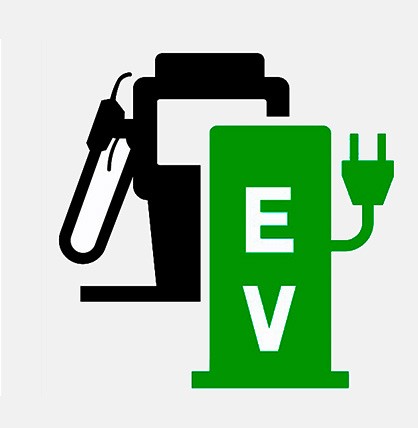
Indicates that this location has a pump or service station offering conventional fuels (petrol and/or diesel) that also has an electric vehicle charging point. The petrol pump appears in black or its usual colour, and the electric charging pump appears in green.
This is the most common sign at traditional service stations that have added a charging hub. You’ll find it on urban roads as well as on conventional roads and motorways. When you see it, it means you can charge and refuel at the same spot, which makes it very handy on long journeys shared with drivers of petrol or diesel cars.
✅ If your car is electric and you see this sign: you can charge there. If there’s a queue at the charging point, that same service station also has conventional fuel available for other vehicles, so the space tends to be well organised. zado.
Sign B — Dedicated electric charging station clusiva
Electric charging point (dedicated) (MOV 2022/12 · Type B).
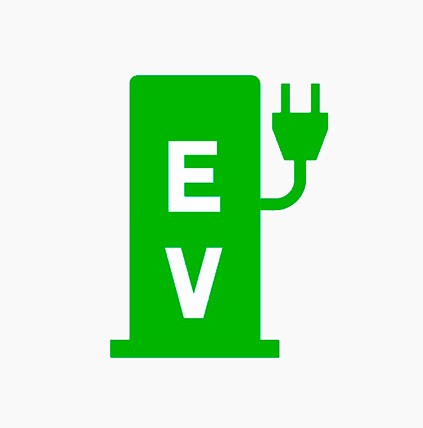
Indicates a purely electric charging station, with no conventional fuel. The pictogram shows only the charging post or pump in green. There’s no petrol station attached.
This sign identifies standalone charging hubs: publicly accessible charging points that operate independently, without any fuel facilities. They’re increasingly common in urban car parks, shopping centres, motorway service areas and hotel car parks. When you see it on the road, it means there’s an electric charging point ahead and nothing else.
In Spain, this type of installation usually corresponds to medium-to-high power chargers (from 22 kW up to 150–350 kW at rapid charging points), though the power available depends on the operator and specific location.
💡 For foreign visitors:the most common charging hub operators in Spain are Iberdrola, Endesa X, Repsol, Zunder, Ionity and Tesla Supercharger. Each has its own app or payment system, although EU regulation requires chargers over 50 kW on major roads to accept bank card payment since 2024.
SignC — Fuel, LPG and electric charging station
Petrol station with LPG and electric charging (MOV 2022/12 · Type C)
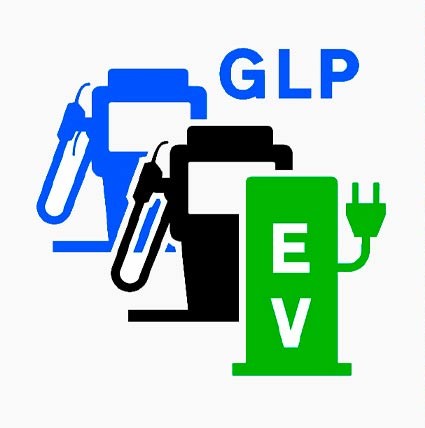
Indicates that this location has three types of energy: conventional fuel (petrol/diesel, black or standard pump), liquefied petroleum gas (LPG, blue pump) and an electric charging point (green pump). This is the most complete sign and marks a multi-energy service station.
This sign is less common but increasingly found at large motorway service areas and service stations with significant infrastructure investment. The three-colour reference — black for fuel, blue for LPG and green for electric — is a code being standardised across Europe, so drivers used to travelling around the continent can recognise it regardless of which country they’re in.
Electric vehicle pictogram — The reference icon
Electric vehicle pictogram (MOV 2022/12 · Supplementary)
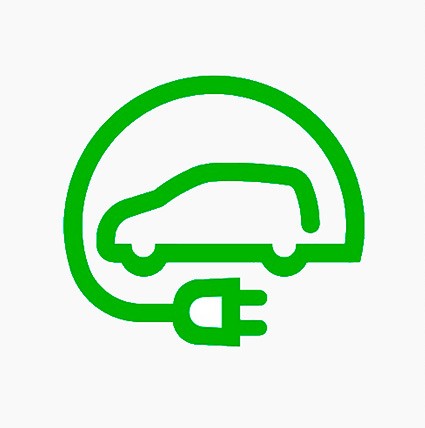
Shows a car in profile surrounded by or connected to a cable, in green. This isn’t a standalone traffic sign but a supplementary pictogram added to other signs to indicate that particular signage or restriction applies specifically to electric or plug-in vehicles.
This pictogram is the most versatile in the system. You’ll see it combined with parking signs, access restrictions, reserved zones and road markings. Wherever it appears, the message is the same: “this applies specifically to plug-in electric vehicles.” For example, a parking sign with this pictogram means the bay is reserved for electric vehicles; a restriction sign with this pictogram means the rule only applies to that type of vehicle.
Signage in car parks: outdoor and covered
Car parks — both open-air surface ones and covered or underground ones — have their own system of signage for electric charging points, combining vertical signs with horizontal road markings. Understanding this system matters, because offences in these areas do carry traffic fines when the car park is public.
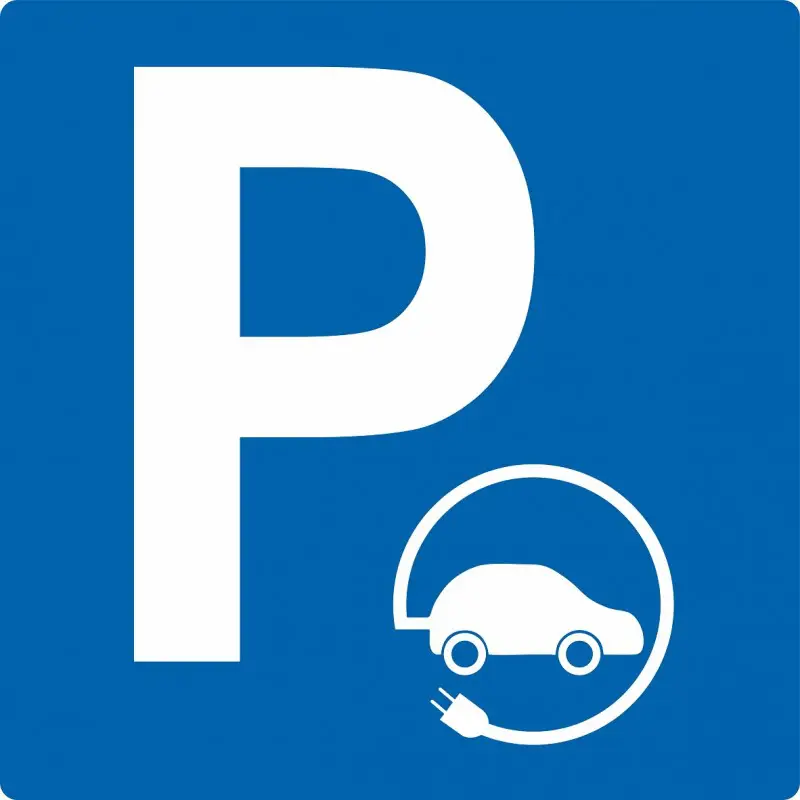
Sign S-17 — The reserved parking sign
Sign S-17 with the electric vehicle pictogram (S-17 + EV pictogram). The S-17 sign indicates an area set aside for vehicle parking. When accompanied by the electric vehicle pictogram (the car with a cable), it marks the parking area as reserved specifically for plug-in electric vehicles actively charging. It usually includes a plate below showing the maximum charging time allowed.
This is the most common sign in public car parks, large retail sites and municipal car parks with charging points installed. For traffic regulations to apply and for fines to be issued, the S-17 sign must be properly installed and visible. If a charging bay in a shopping centre or private car park doesn’t have this sign or the alternatives described below, it can’t be penalised through traffic enforcement — though the operator may still apply its own internal rules.
Signs R-307 and R-308 — No stopping or parking, with exception

R-307 / R-308 with exception plate below (R-307 / R-308). R-307 bans stopping and R-308 bans parking along the marked stretch. When these signs are accompanied by a plate below indicating an exception for electric vehicles charging, the meaning is: no one may park here, except plug-in electric vehicles actively charging.
This combination is used when the space isn’t designed as a conventional parking bay but specifically as a stopping point for charging. It’s common on surface parking bays in central areas, where space is limited and the aim is to ensure a fast turnover at the charging point.
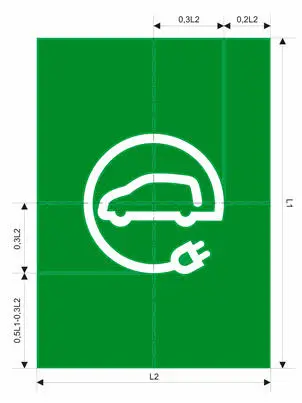
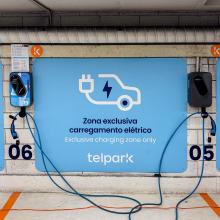
Charging bays reserved for electric vehicles in car parks are usually marked out with green or blue paint (instead of the usual white or blue), and include the car-with-cable pictogram painted on the ground. This distinctive colour makes it easy to spot the bay from a distance, before reading any vertical sign.
Madrid City Council, in its electric mobility regulations, requires that public charging bays be marked with an identifying colour and the electric vehicle pictogram on the ground. This combination of vertical signage (S-17 or R-308) plus coloured road markings is the standard being rolled out progressively across Spain’s major cities.
💡 Rule of thumb: if a bay has a green or blue road surface with the plugged-in car pictogram, it’s an electric charging bay. Always check the vertical sign for the maximum time allowed and the exact conditions. xactas.
Signage at service stations
Las estaciones de servicio son el punto de referencia habitual para los conductores que necesitan recargar durante un trayecto. Desde la instrucción MOV 2022/12, deben señalizar sus puntos de carga eléctrica con los pictogramas oficiales de la DGT. Así es cómo funciona:Service stations are the usual point of reference for drivers who need to charge during a journey. Since Instruction MOV 2022/12, they must mark their electric charging points with the official DGT pictograms. Here’s how it works:
Signs outside and on approach to the station
As you approach a service station, service signs (rectangular panels with a blue background and white or coloured pictograms) may include the DGT pictograms. If the station has electric charging, you’ll see the green pump on the panel. If it also has LPG, you’ll see the blue pump too. If it only has conventional fuel, the green pictogram won’t appear.
In practice, the signs at the entrances to service stations themselves — the sign you see as you drive in — also use the MOV 2022/12 colour code: green for electric, black or standard colour for petrol and diesel, blue for LPG.
Signs inside the station: the pump panel
Once inside the service station, electric chargers are usually physically separate from the fuel pumps. In many cases they’re in a specific area, marked with the electric vehicle pictogram and, often, the logo of the charging network operator (Iberdrola, Repsol, Endesa, Ionity, etc.).
- Type 2 charging points (AC): slow or semi-fast charging, typically 7 to 22 kW. Suited to long stops (meals, rest breaks, overnight stays). More common in service area car parks or in the station’s outdoor area.
- CCS Combo / CHAdeMO chargers (DC): rapid or ultra-rapid charging, from 50 kW up to 350 kW. Can add between 100 and 300 km of range in 20–30 minutes. Most common at standalone charging hubs beside motorways.
- Tesla Superchargers: exclusive to Tesla vehicles (although since 2023 some are accessible to other brands via the app). Marked with the distinctive red T logo.
💡 Tip for the road: before setting off, check your app or your vehicle’s built-in sat nav to plan your charging stops. The main networks (Iberdrola SmartCharge, Repsol Waylet, Zunder, Ionity) have their own apps with up-to-date maps. You can also use general apps like Plugshare or ABRP (A Better Route Planner), both very popular among EV drivers across Europe.
Signage on motorways and major roads
Motorways and dual carriageways are where electric charging point signage matters most to EV drivers. Here, the distance between stops can be significant, and planning your charging is an essential part of the journey. Official signage in these environments follows the DGT standard, but with specific formats for high-speed roads.
Service signs on motorways — The blue panel
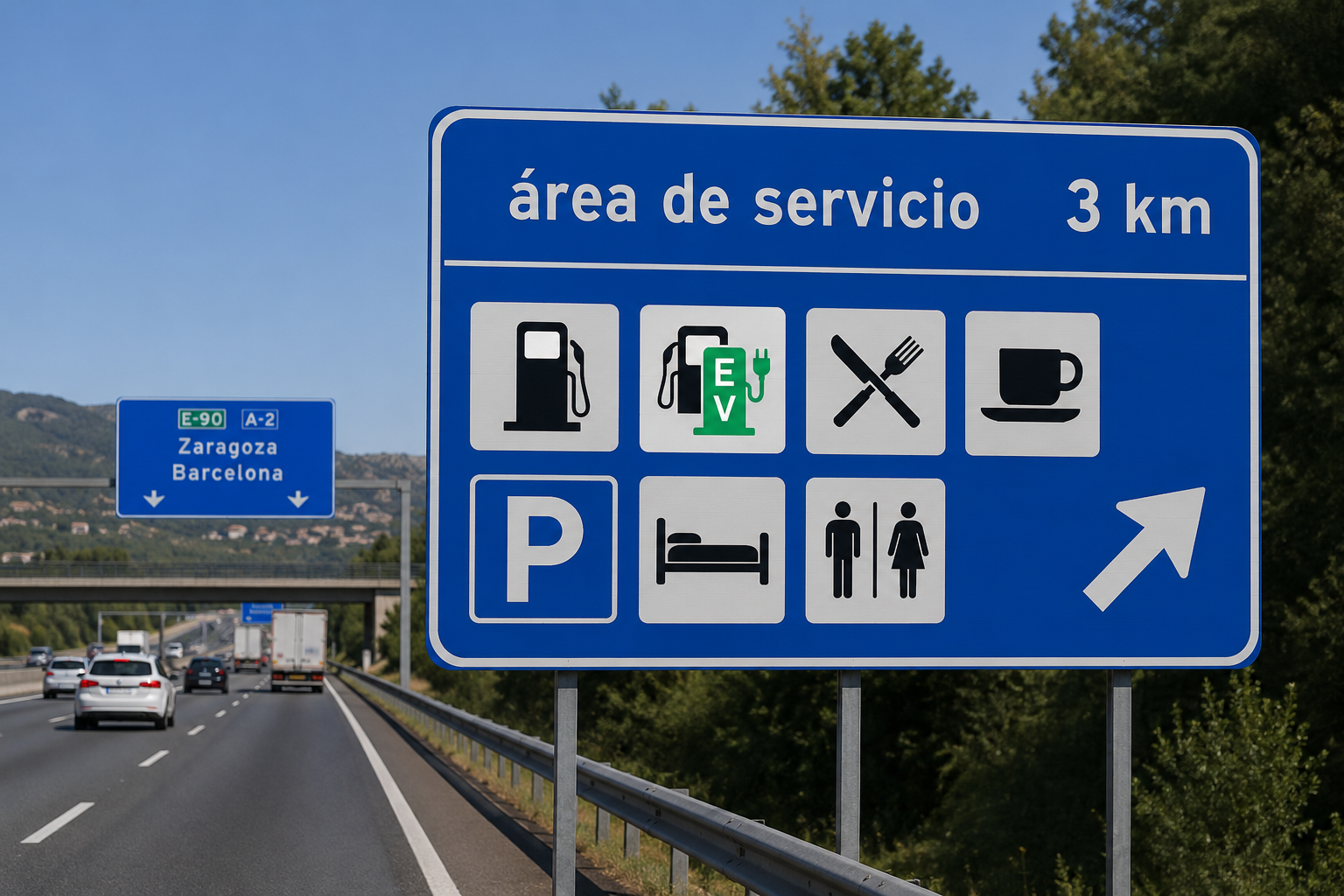
On Spanish motorways and dual carriageways, the services available at upcoming exits or rest areas are announced via rectangular panels with a blue background and white or coloured pictograms. These panels are placed with enough advance notice for drivers to decide whether to stop or continue.
Since Instruction MOV 2022/12 came into force, motorway service panels that include an electric charging point must show the green pump pictogram (Type B or A sign, as appropriate). The usual sequence of signage is:
- 3 km from the service area: panel showing all available services, including the electric charging pictogram if available.
- 1 km: confirmation panel and exit lane.
- At the entrance to the area: specific signage from the charging hub operator, showing the exact location within the area.
Service areas with electric charging in Spain
The network of charging points on Spanish motorways has grown significantly since 2022, driven by the European AFIR regulation (Alternative Fuels Infrastructure Regulation), which requires that from 2025 there be charging points of at least 150 kW every 60 km on the main corridors of the Trans-European Transport Network (TEN-T). This includes the main routes across the Iberian Peninsula: the Mediterranean corridor, the Atlantic corridor and the North-South connections.
In practice, most large motorway service areas in Spain already have at least one rapid DC charger. However, availability on secondary roads and national routes is still patchy, particularly in rural and mountainous areas.
Secondary roads and national routes
On conventional roads (two-lane N-, C- and A-roads), signage for charging points follows the same official standard but at a lower density. Here it’s especially important to:
- Plan with more range in reserve: the distance between charging points can be greater and the power available is often lower (slow or semi-fast charging of 7–22 kW rather than rapid charging).
- Not rely solely on physical signs: signage renewal on secondary roads is slower. A charging point may not yet be signposted even though it’s been operating for some time. Always use a real-time charging point app as a backup.
- Watch out for small towns: many local councils have installed charging points in the municipal car park or next to the town hall. These points rarely appear on road signage but do show up in charging apps.
Specific signage for LEZs and restricted access
Since 2025, the DGT’s official sign catalogue has included the new R-120 sign, indicating a ban on entry to an area based on the vehicle’s environmental label. This sign is the main visual tool for Low Emission Zones (LEZs, or ZBE in Spanish) and matters to EV drivers because, in areas where it applies, vehicles with the Zero Emissions and ECO labels are generally exempt from the restrictions.
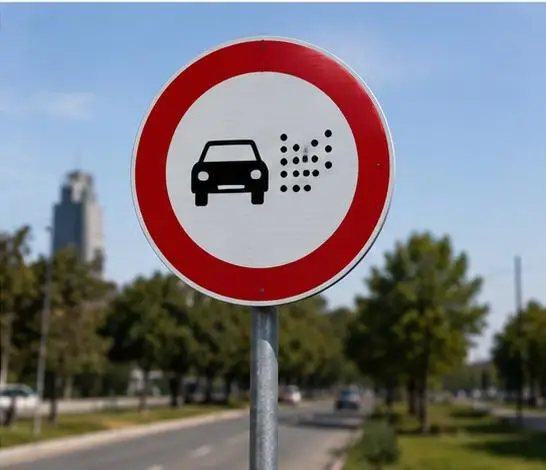
Sign R-120 — Emissions-based access restriction (R-120 · Since 2025)
Indicates a ban on entry for vehicles of a certain environmental classification. May be accompanied by the affected environmental label (no label, B, C…) and the hours it applies. Vehicles with the Zero Emissions label (electric) and ECO label (hybrids) are generally exempt from the restrictions shown on this sign.
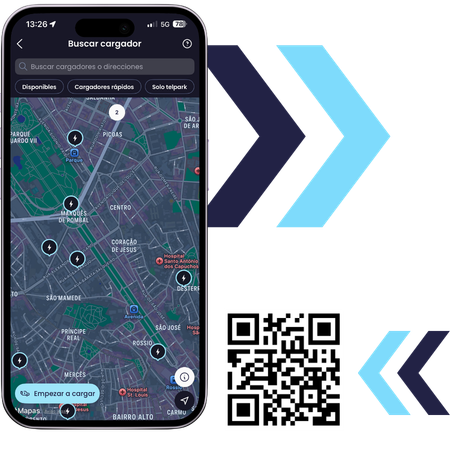
Charging at Telpark car parks: stop, charge and carry on
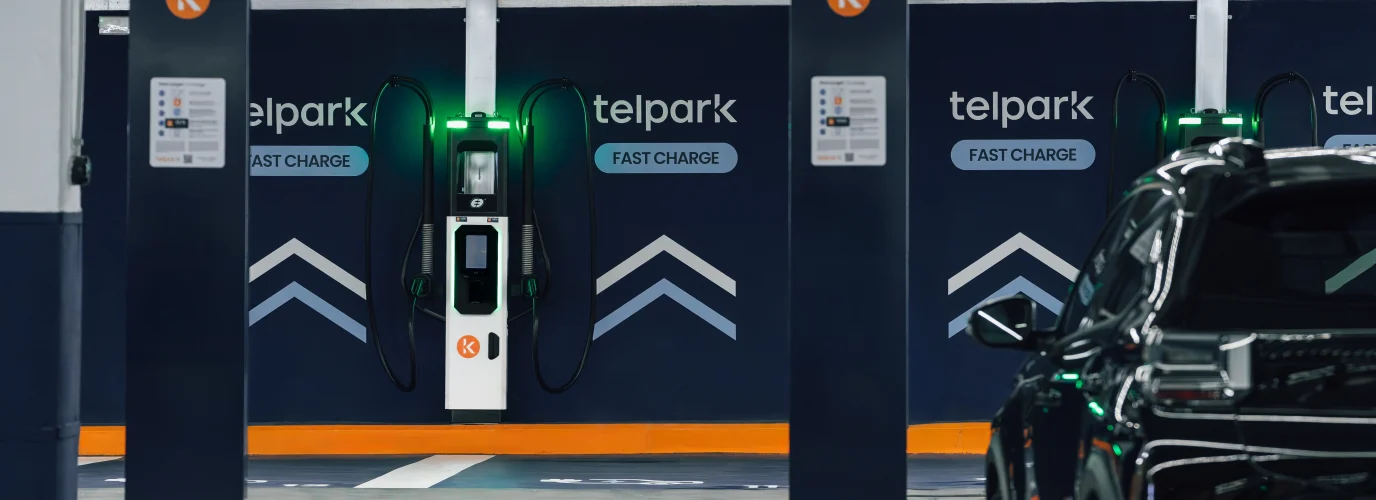
Finding a charging point in the middle of the city, with guaranteed parking and no need to hunt around, is exactly what Telpark’s network of electric charging car parks offers. If you drive an electric or plug-in hybrid vehicle, you can combine parking time with charging your battery without any extra hassle: park, plug in, done.
Charging points at Telpark car parks are signposted to the official DGT standard: an S-17 sign with the electric vehicle pictogram, road markings and signage showing the type of charger available. No surprises, no confusion, and the same rules as any properly signposted public facility.
- Bays marked to the official standard: painted in an identifying colour with the electric vehicle pictogram on the ground and vertical signage in line with DGT regulations.
- Charging available while you park: no need to look for a separate charging point — make the most of your parking time to charge, whether you’re running errands, working, or grabbing a bite nearby.
- Network of car parks across Spain’s major cities: available in Madrid, Barcelona, Valencia, Seville, Málaga, Bilbao and other cities, with the network continuing to grow.
- Compatible with any electric or plug-in hybrid vehicle: the chargers at Telpark car parks are compatible with the most common charging standards on the European market.